Xsolis Data Breach Class Action Lawsuit Investigation
Abington Cole + Ellery is investigating potential legal claims related to the Xsolis data breach, which reportedly affected more than 1.3 million individuals and may have exposed NAME / ADDRESS / SSN / DOB / INSURANCE DATA / MEDICAL DATA.
Published June 16, 2026 | Last updated June 22, 2026
Reviewed by Cornelius P. Dukelow | licensed lawyer and registered patent attorney.
Xsolis Data Breach: Key Facts
Company: Xsolis, Inc.
Location: Franklin, Tennessee
Incident Type: Phishing Attack
Number of People Affected: 1,396,519
Reported Data Involved: NAME / ADDRESS / SSN / DOB / INSURANCE DATA / MEDICAL DATA
Date Breach Began: January 20, 2026
Date Breach Ended: January 22, 2026
Date Breach Discovered: January 22, 2026
Notice Date: June 5, 2026
Credit Monitoring: YES
Status: Class Action Lawsuit Investigation
What happened in the Xsolis data breach?
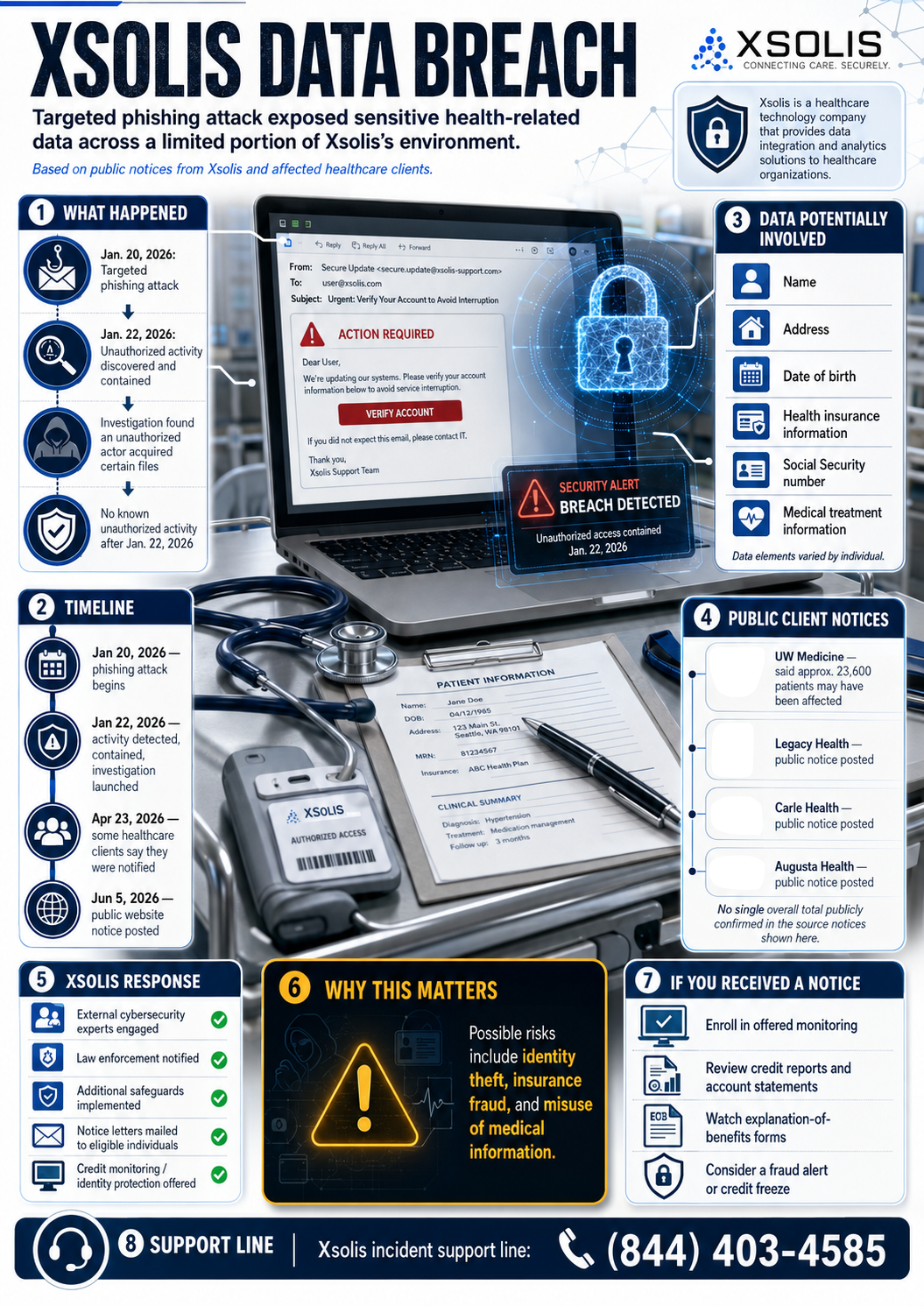
Xsolis recently disclosed a data security incident involving personal and protected health information held in connection with its work as a case and utilization management vendor for healthcare organizations. According to Xsolis, the incident began with a targeted phishing attack on January 20, 2026, and the company became aware of unauthorized activity affecting a limited part of its technology environment on January 22, 2026. Xsolis says it contained the activity that same day, ended the unauthorized access, isolated affected systems and accounts, notified law enforcement, and began an investigation with outside cybersecurity experts. The investigation found that an unauthorized actor accessed portions of the Xsolis environment and acquired a limited number of files, which may have contained information such as names, addresses, dates of birth, health insurance information, Social Security numbers, and medical treatment information, depending on the individual. Several healthcare organizations later posted patient-facing notices about the incident, including UW Medicine, Carle Health, Legacy Health, and VHC Health; UW Medicine reported that approximately 23,600 of its patients may have been affected, though a total number of affected individuals across all Xsolis clients has not been publicly confirmed. Xsolis publicly announced the incident on June 5, 2026, stated that it had found no evidence of unauthorized activity after January 22, 2026, and said it was offering eligible individuals complimentary identity monitoring services.
How did the Xsolis breach occur?
The Xsolis data breach was reportedly the result of a phishing attack.
When did the Xsolis breach occur?
The Xsolis data breach reportedly took place between January 20, 2026, and January 22, 2026.
How many people were affected by the Xsolis breach?
1,396,519 people have reportedly been affected by the Xsolis data breach.
What information was exposed in the Xsolis breach?
- Breached data reportedly may include, but is not necessarily limited to:
- name
- address
- Social Security number
- date of birth
- health insurance information
- medical treatment information
Has Xsolis offered free credit monitoring and/or identity theft protection services?
Yes. Xsolis is offering 12 months free credit monitoring and/or identity theft protection services from Kroll to affected individuals as a result of the data breach.
Xsolis data breach timeline:
| Date | Event |
|---|---|
| January 20, 2026 | Unauthorized activity began. |
| January 22, 2026 | Xsolis discovered the incident. |
| January 22, 2026 | Unauthorized activity ended. |
| UNCONFIRMED | Data breach investigation concluded. |
| June 5, 2026 | Xsolis began public notification. |
Who is Xsolis?
Xsolis is a healthcare technology company based in Franklin, Tennessee, that develops AI-enabled tools for hospitals, health systems, and health plans. Founded in 2013, the company focuses on improving utilization management, medical necessity review, length-of-stay planning, revenue cycle processes, and collaboration between providers and payers. Its platform uses clinical and operational data to help healthcare organizations make more consistent care-level and administrative decisions while reducing the manual work often involved in review and authorization processes.
What should affected individuals do?
Start by reading the notice letter carefully and enrolling in the complimentary identity monitoring services if eligible. Xsolis says those services include credit monitoring, fraud consultation, and identity theft restoration, and that eligible people should follow the enrollment instructions in their letter. Xsolis also lists a dedicated assistance line at 844-403-4585, Monday through Friday, 8:00 a.m. to 5:30 p.m. Central Time.
Because the incident may have involved health insurance and medical treatment information, people should also watch for signs of medical identity theft. Review explanation-of-benefits statements, medical bills, insurance notices, patient portal activity, and appointment or prescription records for services, providers, diagnoses, prescriptions, or unrecognized claims. The FTC warns that medical identity theft can affect insurance benefits, credit, and even the accuracy of a person’s medical records.
If you see suspicious activity, act quickly: report identity theft through IdentityTheft.gov, contact your bank or credit card issuer if financial accounts are involved, notify your health insurer or medical provider if medical claims are involved, and keep copies of letters, bills, reports, and time spent responding. The IRS also maintains identity-theft resources for tax-related misuse, including steps for people whose information is used in tax fraud.
Finally, affected individuals should be alert for follow-up phishing attempts. Scammers may impersonate Xsolis, Kroll, a hospital, an insurer, or a government agency and ask for Social Security numbers, insurance IDs, payment information, or login credentials. A safer practice is to use the contact information in the official notice letter or on the provider’s official website, rather than relying on links or phone numbers in unexpected emails or texts.
Xsolis Data Breach Notice
The notice describes the Xsolis data breach, including the type of information that may have been involved and the steps offered to affected individuals.
Open the Xsolis Data Breach Notice in a New Tab
Sources and additional information about the breach:
-
- Xsolis Website
- Xsolis, Inc. Website Notice of Data Security Incident
- HealthExec: Healthcare AI vendor suffers data breach, exposing patient records to hackers
- University of Washington Medicine
- Legacy Health
- Carle Health
- U.S. Department of Health and Human Services Office for Civil Rights Breach Portal
- FTC Consumer Advice: Identity Theft
- IdentityTheft.gov
FAQ - Frequently Asked Questions
Abington Cole + Ellery reviews data breach incidents involving sensitive personal information, financial information, and protected health information. This page is intended to help affected individuals understand the publicly reported facts, the types of information that may have been involved, and practical steps that may reduce the risk of identity theft or medical identity theft.
The information on this webpage is provided for general informational purposes only and does not constitute legal advice. Nothing on this page should be relied upon as legal advice for any particular situation. Submitting information through this page does not create an attorney-client relationship.
For more information about steps you can take to possibly reduce the risk harm arising from a data breach, please review the following article: What are some steps you can take if you've been the victim of a data breach?
This website is not associated with nor authorized by Xsolis or any affiliated companies. If you have received any other data breach notifications, you may want to review Abington Cole + Ellery's current list of data breach investigations.